
What’s in This Guide
- Why Bathroom Floors Become Slippery
- What Makes Bathroom Flooring More Slip Resistant?
- Which Materials Work Best in Wet Bathrooms?
- How to Choose the Best Tiles for Bathroom Floor Non Slip Performance
- Which Bathroom Areas Need the Most Slip Protection?
- Which Design Choices Improve Both Safety and Style?
- When Is Bathroom Flooring Ready for Replacement?
- Frequently Asked Questions
- Choose Bathroom Flooring With Confidence
Quick Facts
- Non slip bathroom floor tiles improve safety by providing better traction in wet areas while maintaining water resistance and durability.
- Surface texture, tile size, grout layout, and proper installation all contribute to slip resistance and long-term performance.
- Compare materials based on moisture resistance, maintenance needs, comfort, and everyday use instead of appearance alone.
- Replacing worn or slippery flooring can improve both bathroom safety and overall functionality.
Bathrooms are moisture-prone areas where water, soap, and high humidity create slippery surfaces. Selecting slip-resistant flooring is crucial for home safety and long-term durability.
Today’s options can improve traction without making the bathroom feel purely utilitarian. This guide details safe materials and how to choose the right option.
Why Bathroom Floors Become Slippery
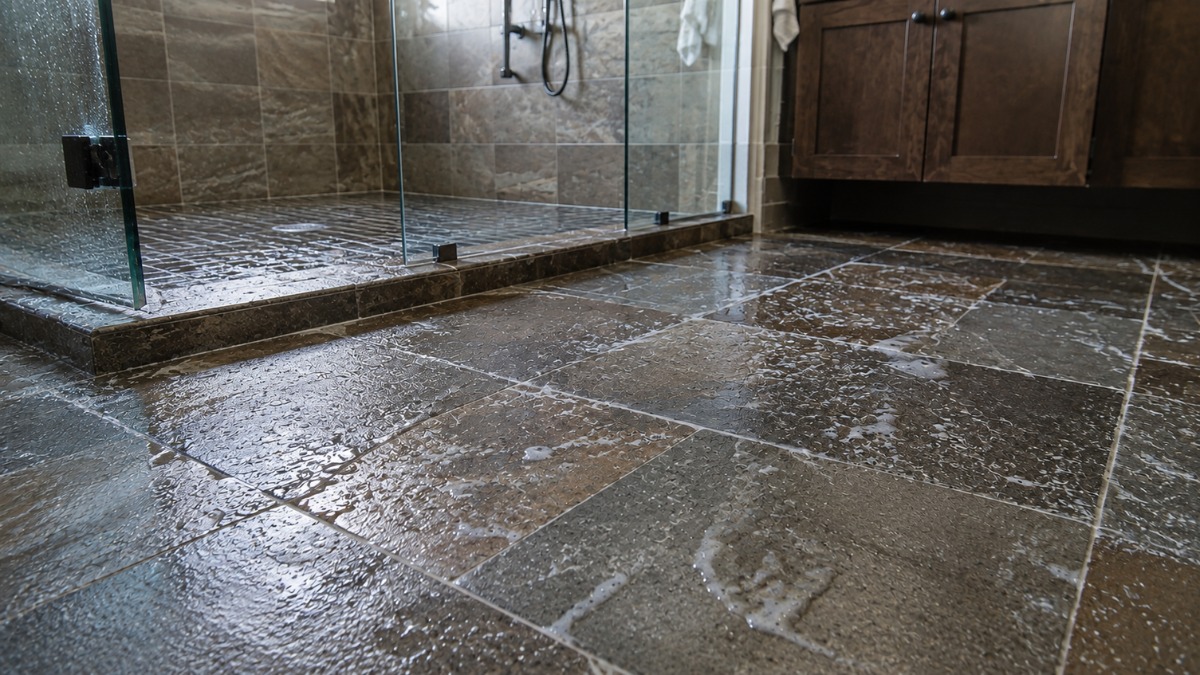
Even high-quality flooring can become slippery when water, soap residue, and smooth finishes work against traction.
Water and Soap Residue
Showers, sinks, and bathtubs regularly introduce water onto the floor. Soap residue can create a thin film that reduces traction, particularly on smooth surfaces.
Highly Polished Finishes
Glossy finishes often reflect more light and create a sleek appearance, but they generally provide less grip than textured or matte surfaces when wet.
Everyday Household Moisture
Steam from showers increases humidity throughout the room. Combined with water tracked across the floor, this moisture contributes to slippery conditions if the flooring is not designed for wet spaces.
Wear Over Time
Years of foot traffic, repeated cleaning, and daily use may gradually reduce the surface texture of some flooring materials. Regular maintenance helps preserve both appearance and performance.
What Makes Bathroom Flooring More Slip Resistant?
Not every bathroom floor provides the same level of traction. Several characteristics work together to improve safety.
Surface Texture
Texture is one of the biggest contributors to slip resistance. Slightly textured finishes create additional grip underfoot without making the floor difficult to clean.
Many homeowners looking for non slip bathroom floor tiles choose textured porcelain or ceramic surfaces because they provide a balance between appearance and practicality.
Tile Size and Grout Lines
Smaller tiles naturally create more grout joints across the floor. Those additional grout lines can provide extra traction, especially in areas that frequently become wet.
Larger tiles remain popular for their clean appearance, but the surface finish becomes increasingly important when fewer grout joints are present.
Slip Resistance Ratings
Many flooring products include slip-resistance information that helps homeowners compare options. Reviewing manufacturer specifications alongside appearance allows buyers to select flooring that fits both safety and design goals.
Moisture Resistance
A bathroom floor should resist water penetration while maintaining a stable surface. Materials designed specifically for wet environments generally perform better over time than products intended for dry living spaces.
Professional Installation
Even the safest flooring material depends on proper installation. Correct subfloor preparation, flat surfaces, and quality workmanship all contribute to the finished floor's long-term performance.
Which Materials Work Best in Wet Bathrooms?
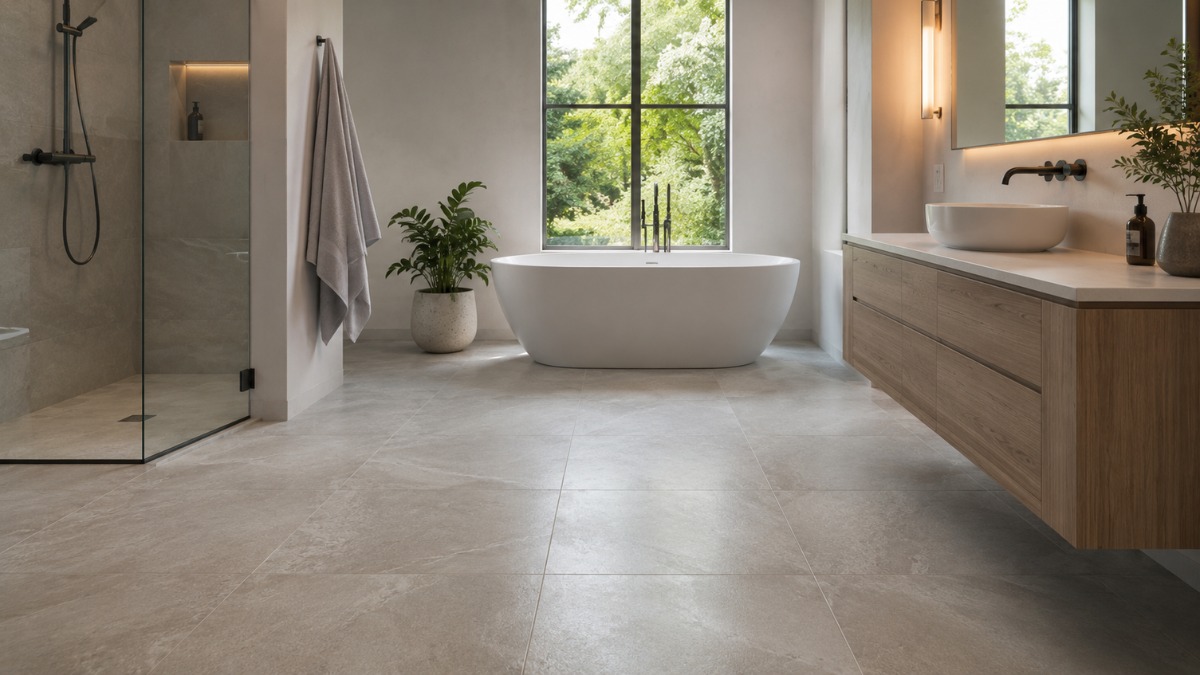
Every flooring material has strengths and limitations. Comparing them side by side makes it easier to select a solution that fits your household.
Porcelain Tile
Porcelain remains one of the most popular choices for bathrooms because it is dense, highly water resistant, and available in numerous colors and textures. Many textured porcelain products are designed specifically as non slip bathroom floor tiles, making them suitable for bathrooms with frequent moisture exposure.
Ceramic Tile
Ceramic tile provides many of the same design benefits as porcelain while often offering a slightly lower initial cost. Choosing an appropriate finish helps improve traction without sacrificing style.
Luxury Vinyl Flooring
Luxury vinyl flooring has become a popular option for bathrooms because it combines water resistance with a softer feel underfoot than tile. Many products feature textured wear layers that improve traction while offering the appearance of wood or stone. For homeowners prioritizing comfort, luxury vinyl can be an effective non slip bathroom flooring solution.
Natural Stone
Natural stone creates a distinctive appearance, but slip resistance depends on the type of stone and its finish. Honed or textured surfaces generally provide better traction than polished finishes. Regular sealing may also be recommended to help protect the material from moisture.
Sheet Vinyl
Sheet vinyl offers a nearly seamless surface that helps limit moisture penetration. Many products include textured finishes designed for wet rooms, making them a practical option for households seeking a balance between comfort, maintenance, and affordability.
How to Choose the Best Tiles for Bathroom Floor Non Slip Performance
Selecting the right tile involves more than choosing a color or pattern. The surface finish, room layout, and household needs all contribute to how well the floor performs over time.
Compare Surface Finishes
Matte and lightly textured finishes generally provide more traction than polished surfaces. When comparing options for the best tiles for bathroom floor non slip performance, consider how the surface feels underfoot when dry and wet.
Select an Appropriate Tile Size
Tile size affects both appearance and functionality, so compare the visual effect with the traction needs of the room. The right choice depends on the bathroom layout and desired aesthetic.
Consider Grout Layout
Grout does more than separate tiles. Its placement contributes to the floor’s overall grip while helping accommodate minor movement within the installation. Selecting a grout color that complements the tile can also enhance the finished design.
Match the Floor to Household Needs
Every household uses a bathroom differently. Families with young children, older adults, or anyone with mobility concerns may prioritize additional traction, while others may focus on balancing safety with easier cleaning and maintenance.
Balance Safety With Maintenance
The best tiles for bathroom floor non slip should offer dependable traction without creating unnecessary maintenance demands. Some highly textured surfaces may require more frequent cleaning, so comparing safety features alongside long-term care requirements helps narrow the options.
Which Bathroom Areas Need the Most Slip Protection?
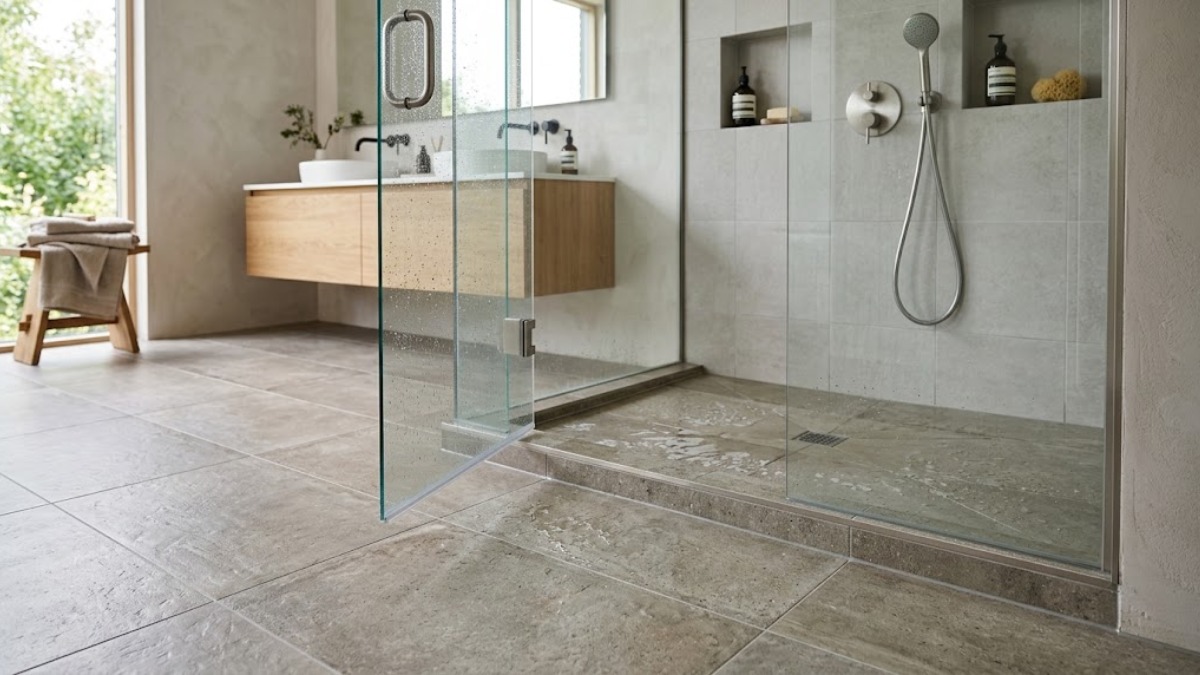
Certain parts of the bathroom experience more water exposure than others. Paying extra attention to these locations can improve overall safety.
Around the Shower
The area immediately outside the shower or tub is often the wettest section of the bathroom. Flooring with additional surface texture helps improve footing as water is tracked onto the floor.
In Front of the Vanity
Water splashes from sinks and daily routines can leave this area damp throughout the day. Choosing flooring that performs well under repeated moisture exposure helps reduce slip risks.
Near the Toilet
Although this section typically stays drier than the shower area, occasional spills and routine cleaning still expose the floor to moisture. Consistent flooring throughout the bathroom provides both safety and a unified appearance.
Bathroom Entryways
Water often travels beyond the immediate wet areas as people enter and leave the room. Selecting durable non slip bathroom flooring helps maintain traction throughout the entire space rather than only around fixtures.
Which Design Choices Improve Both Safety and Style?
Choosing safer flooring does not mean sacrificing appearance. Many modern products combine attractive finishes with practical performance.
Matte Surface Finishes
Matte finishes are popular because they provide a softer appearance while generally offering better traction than highly polished surfaces. They also tend to show fewer footprints and water spots.
Neutral Color Palettes
Soft gray, beige, white, and earth-tone flooring continues to be popular for bathrooms. Neutral colors pair well with changing décor and create a timeless look that remains appealing for years.
Patterned Tile Layouts
Herringbone, basketweave, and offset patterns add visual interest without affecting the floor’s overall functionality. Pattern selection should complement the room’s size and style rather than overwhelm it.
Coordinated Fixtures and Finishes
Matching flooring with vanities, wall tile, hardware, and lighting creates a more cohesive bathroom design. A coordinated space often feels larger and more finished.
When Is Bathroom Flooring Ready for Replacement?
Bathroom flooring does not always fail suddenly. Recognizing early warning signs helps homeowners address problems before more extensive repairs become necessary.
Persistent Cracks or Loose Tiles
Cracked or loose flooring may indicate movement beneath the surface or aging installation materials. Prompt evaluation helps prevent additional damage.
Ongoing Moisture Problems
Repeated water intrusion, damaged grout, or soft spots beneath the floor can signal moisture issues that should be addressed before installing new flooring.
Indoor humidity can also affect how quickly damp areas dry, especially when ventilation is limited. Resolving these conditions first helps support a longer-lasting installation.
Worn or Slippery Surfaces
If the floor no longer provides the traction your household needs, replacement may improve both safety and everyday comfort. Many newer non slip bathroom floor tiles offer better traction than older flooring materials.
Outdated Appearance
Flooring that is structurally sound but no longer matches the home’s style may also be a good candidate for replacement during a bathroom remodel.
➤ YOU MIGHT ALSO LIKE: Why Bathroom Floors Get Moldy (And How to Prevent It)
Frequently Asked Questions
Are textured bathroom tiles difficult to clean?
Most textured tiles can be cleaned using regular bathroom cleaning products and a soft brush when needed. Following the manufacturer’s care recommendations helps maintain both appearance and traction.
Is porcelain better than ceramic for bathrooms?
Both materials perform well in bathrooms when properly installed. Porcelain generally offers greater density and water resistance, while ceramic provides many similar design options.
Can heated floors be installed under bathroom tile?
Yes. Many tile flooring systems are compatible with radiant floor heating when installed according to manufacturer guidelines and local building requirements.
Does grout affect slip resistance?
Grout lines can contribute to overall traction, particularly with smaller tile formats. Properly maintained grout also helps support the long-term performance of the installation.
How long does bathroom flooring usually last?
Lifespan depends on the material, installation quality, moisture exposure, and maintenance. With proper care, many bathroom flooring products provide years of reliable performance.
Choose Bathroom Flooring With Confidence
The best bathroom flooring balances safety, durability, and style. Comparing materials and long-term maintenance helps you find the right fit for your routine. If you’re considering non-slip flooring for your Brewster home, Brewster Flooring Company can help you compare materials, evaluate your subfloor, and choose a bathroom floor that fits your safety, maintenance, and design goals.
Contact Brewster Flooring Company today to discuss your project.