

What’s In This Guide
Bathroom floors collect dust, hair, soap residue, hard-water deposits, and moisture. Learning how to clean bathroom floor surfaces correctly starts with matching the method to the material. Ceramic and porcelain tile clean readily, while natural stone, specialty finishes, and cement-based grout require care. The goal is simple: loosen dirt, remove the dirty solution, rinse away residue, and dry the floor so moisture does not linger.
Quick Facts
- Sweep or vacuum before adding water.
- Test every cleaner in a hidden area.
- Avoid acidic cleaners on cement-based grout and natural stone.
- Rinse thoroughly so cleaner does not attract more soil.
- Dry tile and grout after cleaning.
Check Your Tile and Grout Before Cleaning
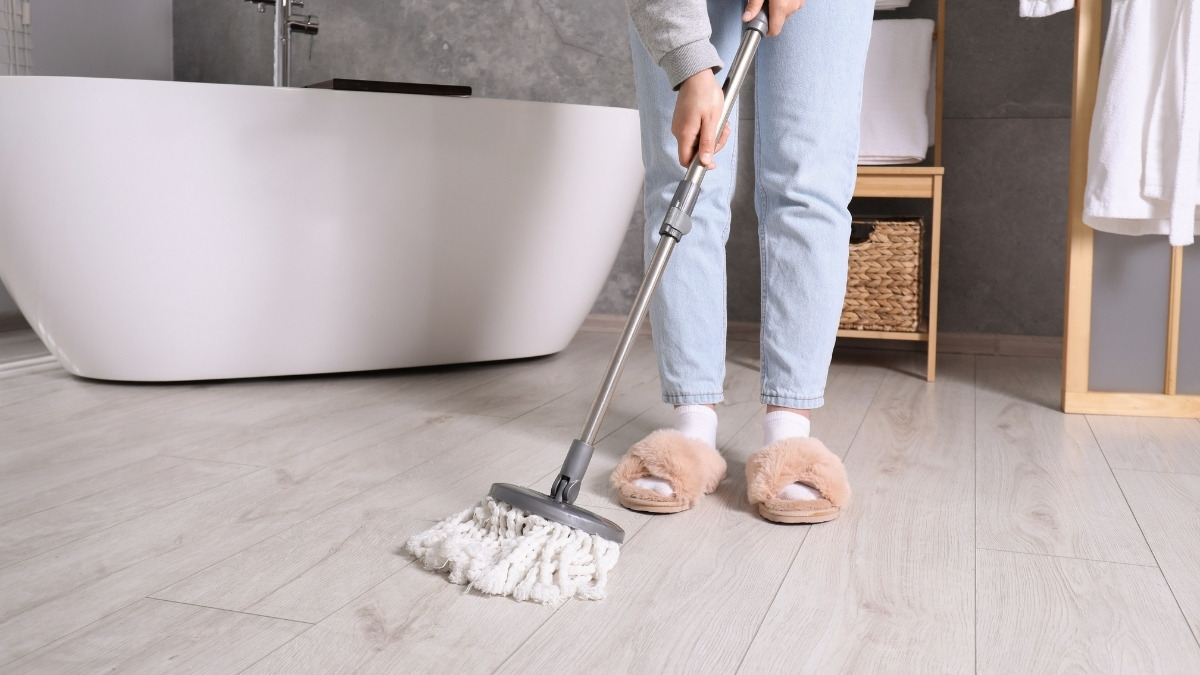
Identify the flooring material before choosing a product. Glazed ceramic and porcelain tile are generally easy to maintain, but unglazed tile and natural stone can absorb liquids or react to acids. Cementitious grout is porous and holds soil more readily than tile.
Review the manufacturer’s instructions for the tile, grout, and sealer. If you cannot identify the material, start with warm water and a pH-neutral cleaner labeled for tile. Do not assume vinegar is safe for the surface.
The Tile Council of North America explains that acids can dissolve cement-based components in grout, potentially weakening or discoloring the joints. Test any cleaning solution in a hidden area before applying it to the entire floor.
How to Clean Bathroom Floor Tiles Step by Step
A consistent cleaning process helps remove dirt and residue without damaging tile or grout. Follow these steps to clean the floor thoroughly while protecting its finish and condition.
1. Clear and Dry-Clean the Floor
Remove bathmats, baskets, and trash cans. Sweep or vacuum corners, edges, and the area behind the toilet. Dry soil can turn into muddy streaks when wet.
2. Prepare a Compatible Cleaning Solution
Follow the cleaner label instead of estimating the concentration. Too much product can leave a film that dulls tile and traps dirt. For lightly soiled ceramic or porcelain, warm water and a small amount of compatible cleaner may be enough. Use clean tools that have not been exposed to other chemicals.
3. Work in Small Sections
Wet the surface without flooding the grout joints or floor edges. Allow the solution to sit for only the amount of time stated on the label. Proper contact time helps loosen residue and reduces the need for aggressive scrubbing.
4. Agitate the Tile Gently
Use a microfiber mop or soft, nonabrasive pad. Scrub textured areas gently to reach low points. Avoid steel wool, stiff wire brushes, and abrasive powders that can scratch finishes.
5. Lift the Dirty Solution
Do not allow dirty water to dry on the floor. Remove it with a clean mop, microfiber towels, or a suitable wet vacuum. Replace the cleaning water when it becomes cloudy, as dirty water can redeposit soil in the grout lines.
6. Rinse and Dry
Rinse with clean water if required by the product label. Cleaner left in porous grout can create a sticky film that attracts dirt. Dry the floor with clean microfiber towels, then ventilate the bathroom until the tile and grout are fully dry.
How to Clean Bathroom Floor Grout Safely
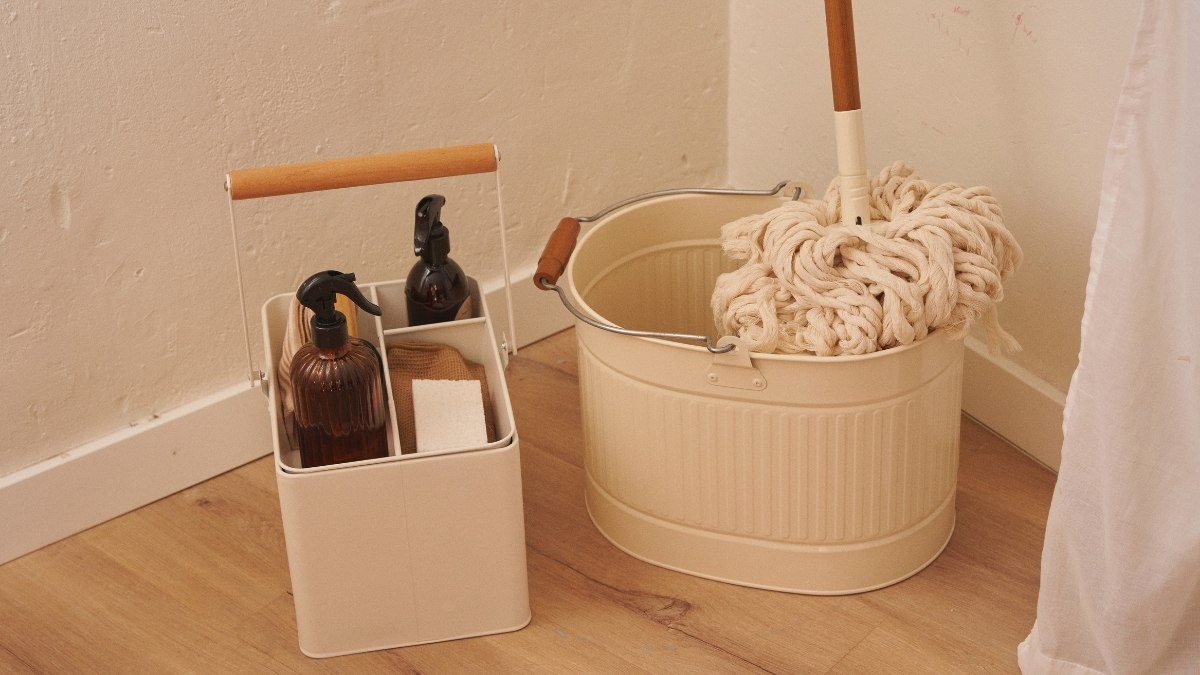
Cleaning bathroom floor grout requires patience rather than excessive force. Apply a grout-compatible cleaner to a small section and allow it to sit for the time specified on the label. Scrub along the grout joints with a soft nylon brush, remove the dirty solution, rinse thoroughly, and dry the area.
For stubborn discoloration, repeat the process before switching to a stronger cleaner. Avoid vinegar and other acids on cement-based grout. Oil- or wax-based products can also leave residue in porous joints. If the grout remains dark after drying, feels soft, is cracked, or separates from the tile, cleaning may not correct the underlying damage.
Prevent Soap Film and Moisture Buildup
Routine care makes deep cleaning easier. Wipe up puddles, allow bathmats to dry, and run the exhaust fan during and after showers. The EPA recommends maintaining indoor humidity between 30% and 50% and using bathroom ventilation to manage excess moisture.
Use a clean microfiber mop each week to remove loose dirt, and clean spills promptly. Rinse away residue rather than applying new cleaner over existing film. Inspect the grout and sealant for gaps, stains, cracks, or loose areas.
Bathroom Floor Cleaning Mistakes to Avoid
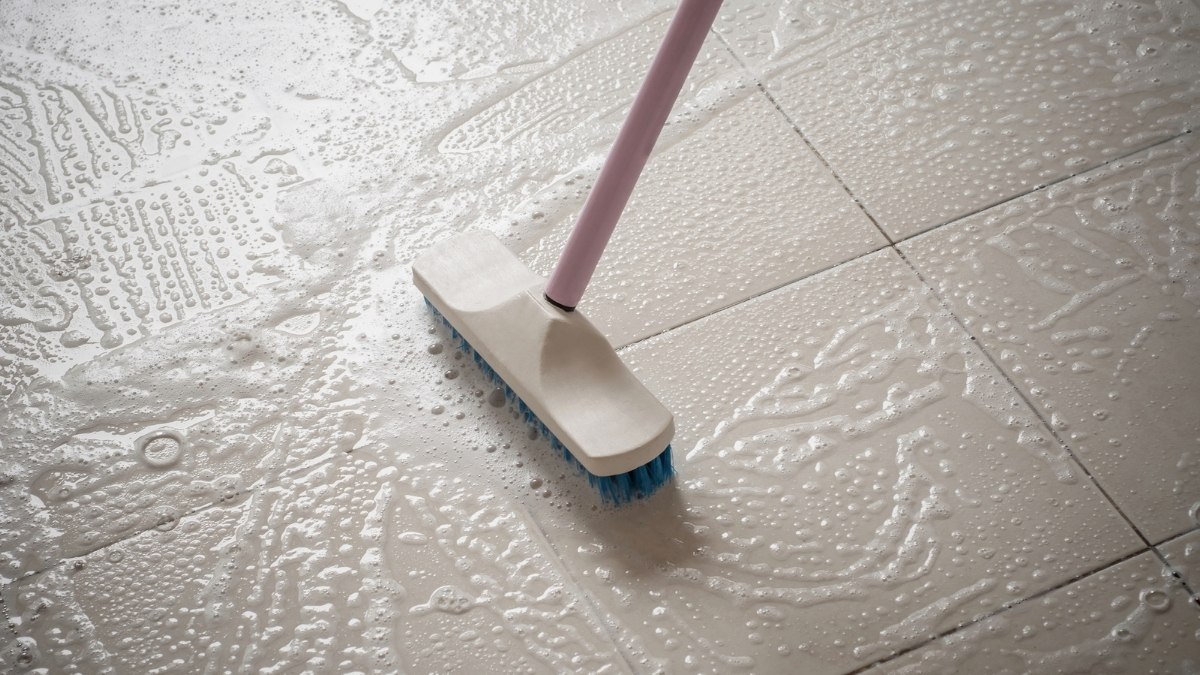
Avoiding a few common mistakes can help protect your flooring, improve cleaning results, and extend the life of tile and grout.
- Mixing bleach with other cleaners: Never mix bleach with ammonia, acids, or other cleaning products because the combination can release dangerous gases. Use bleach only as directed on the product label and in a well-ventilated area.
- Using vinegar on every surface: Choose a cleaner that is compatible with your flooring. Vinegar can damage cement grout and certain natural stone surfaces.
- Flooding the floor with water: Use a damp mop instead of excessive water to help prevent moisture from entering joints, edges, or existing cracks.
- Scrubbing with metal tools: Use a soft nylon brush or another nonabrasive tool to avoid scratching the tile or eroding the grout.
- Skipping the final rinse: Rinse away cleaner residue to help prevent a dull finish and reduce future soil buildup.
Frequently Asked Questions
How often should you clean a bathroom floor?
Remove loose dirt at least once a week and clean spills promptly. Mop as needed based on bathroom use, visible residue, and the flooring manufacturer’s instructions. Frequently used bathrooms may require more regular cleaning.
Can you use bleach on bathroom floor tile and grout?
Use bleach only when permitted by the flooring manufacturer and the product label. Soap and water are sufficient for removing most germs in many household situations. Never mix bleach with another cleaner, and ventilate the bathroom during use.
What is the best way to clean bathroom floor tile grout?
To clean bathroom floor tile grout, apply a compatible cleaner and allow it to sit for the time stated on the label. Scrub the grout with a nylon brush, remove the dirty solution, rinse thoroughly, and dry the area.
Why does grout still look dark after cleaning?
Grout may still be wet, deeply stained, deteriorated, or affected by moisture beneath the tile. Allow it to dry completely before evaluating the result. Persistent darkening, staining, or softness may require a professional inspection.
Can you use a steam mop on a bathroom floor?
It depends on the flooring material and the manufacturer’s instructions. Steam may be suitable for some sealed ceramic or porcelain tile floors, but it can damage natural stone, certain grout sealers, resilient flooring, or adhesives.
Refresh Worn Bathroom Flooring in Brewster, NY
Regular maintenance can help preserve tile and grout, but cleaning cannot repair loose tiles, crumbling grout joints, deep cracks, or damage within the floor assembly. Brewster Flooring Company provides flooring consultations, repairs, replacements, and installations for homeowners in Brewster, NY. If your bathroom floor requires more than routine cleaning, schedule an assessment to discuss the appropriate repair or replacement options.