- Free Estimates

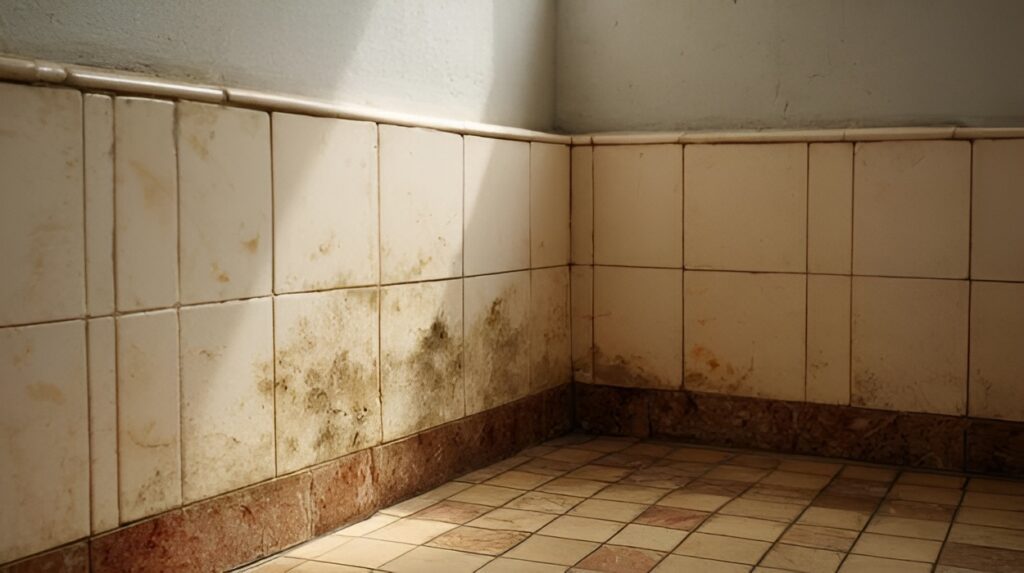
Bathroom floors get moldy because moisture stays trapped after the surface looks dry. Water seeps into grout, caulk joints, and gaps at the toilet and shower, then sits with warmth. That is how mold in bathroom spaces returns even after cleaning. If you are deciding between DIY and flooring contractors, the rule is simple: fix the moisture source first, then clean.
✔ Mold Needs Moisture: Stop the water, and you stop the growth.
✔ Do Not Hide Mold: Painting or caulking over mold will not stop regrowth unless you fix the water problem and remove the mold.
✔ Dry Within 24 To 48 Hours: Faster drying helps prevent mold from taking hold.
✔ Bleach Is Not Routine: EPA and OSHA say bleach is not recommended as a routine practice during mold cleanup, though professional flooring contractors may use it in specific situations.
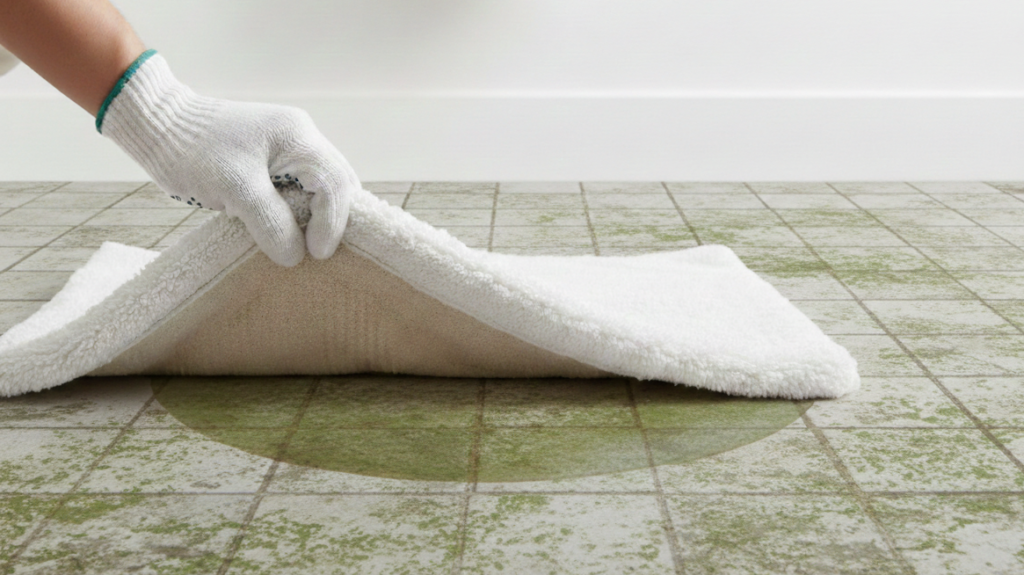
Mold spores are normal indoors, but growth is not. The U.S. Environmental Protection Agency (EPA) explains that mold prevention depends on eliminating excess moisture, fixing the water source, and drying wet materials within 24 to 48 hours. Bathrooms often struggle because floors are exposed to repeated splashes and steam, leaving little time for surfaces and underlying materials to dry fully.
Steam condenses, then runs down to the floor line. That is why black mold in shower corners often shows up where tile meets the curb, at back corners, and where caulk is cracked.
A bathroom can look fine and still feed mold.
If damp air cannot leave, it condenses on cool surfaces, including floors. The U.S. Centers for Disease Control and Prevention (CDC) notes that bathrooms are often hard to keep completely free of mold, and increasing ventilation plus regular cleaning prevents mold from recurring or keeps it minimal.
Soap residue helps mold stick, but moisture drives it. If caulk is separating or grout is cracked, cleaning alone rarely lasts because water keeps entering the joint.
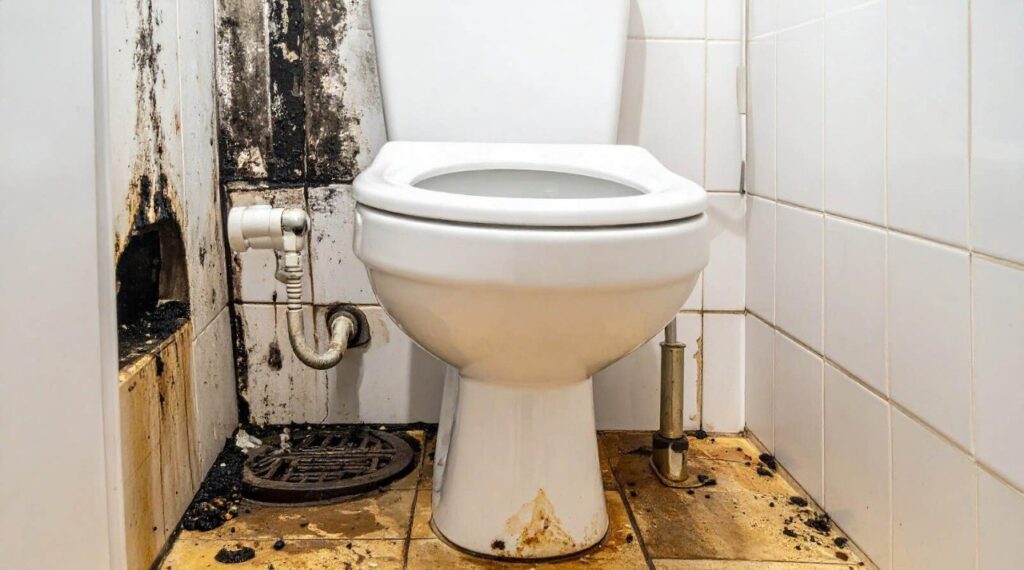
Airflow is usually limited behind the tank, and small splashes are easy to overlook. If you keep seeing stains or notice a musty smell, it can be a sign of trapped moisture at the floor line, which can lead to black mold in toilet areas, not just surface dirt.
Color is not a reliable ID. Focus on conditions: does it return quickly, is the area repeatedly damp, and are materials breaking down? Soft spots, swelling, lifted edges, or loose tile suggest moisture is deeper than the surface.
The CDC warns that mold cleanup can present health and injury risks, and some people should not clean mold because they can have significant health effects from exposure.
For small areas on hard, non-porous surfaces, cleaning can work. EPA guidance emphasizes cleaning mold promptly and fixing the water problem. Use a cleaner, scrub, rinse, and dry thoroughly. Avoid defaulting to bleach as your main strategy.
Tile and waterproof flooring products can both perform well when installed correctly. The difference is the details: sealed edges, tight transitions, and a sound subfloor that stays dry.
Black mold in shower areas can produce mycotoxins, but not all black-colored mold is toxic. The bigger concern is ongoing exposure in a damp space. Persistent mold in bathroom environments can trigger respiratory irritation, especially when moisture problems are not fixed.
Black mold forms when moisture, warmth, and organic material combine over time. In bathrooms, constant humidity, poor ventilation, leaks, and wet surfaces allow mold spores to grow on grout, caulk, flooring seams, and even black mold on wall surfaces near showers.
Small areas of black mold in bathroom tile or grout can sometimes be cleaned safely if the moisture source is fixed. If black mold keeps returning, spreads beyond the surface, or affects flooring or walls, professional help is recommended.
Nothing kills black mold permanently unless the moisture problem is corrected. Cleaning removes visible growth, but fixing leaks, improving ventilation, and drying the area completely is what stops black mold from coming back.
Professional black mold removal costs typically range from a few hundred to several thousand dollars, depending on the size of the affected area, the materials involved, and whether flooring or subfloor repairs are needed.
If black mold in bathroom areas keeps returning, the floor may be holding moisture below the surface. Brewster Flooring Company can help pinpoint the moisture source, evaluate subfloor condition, and recommend bathroom flooring that is installed and sealed for use in Brewster, NY.