
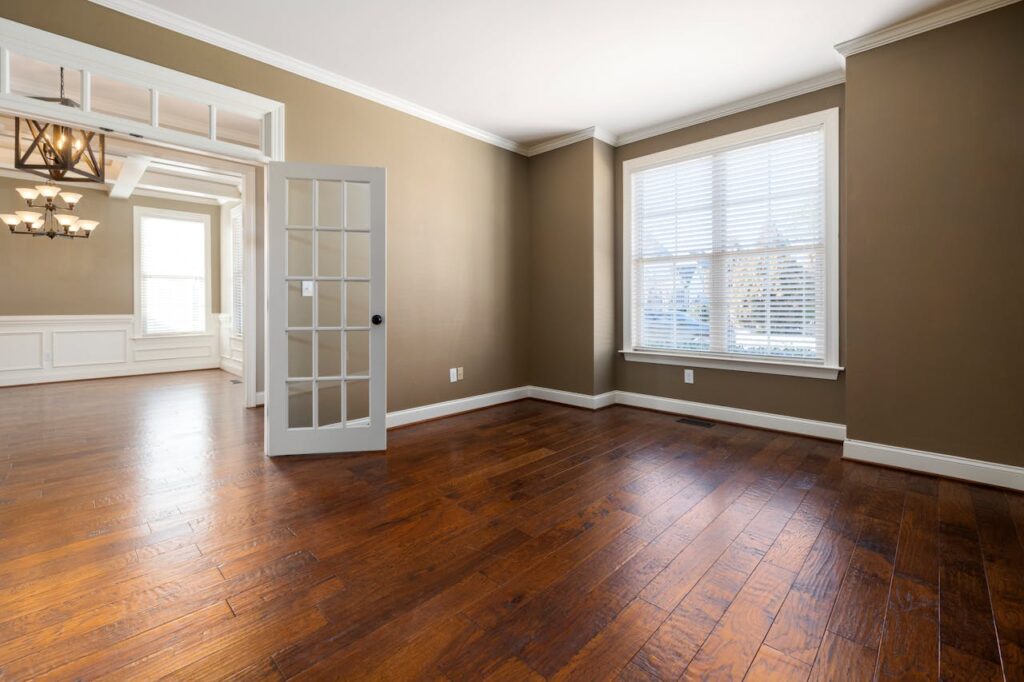
How Wood Floors Shape Your Wall Color Palette
Quick Facts
✔ Wood floors should guide your wall color choices since they are the most permanent design element.
✔ Identifying undertones is key to avoiding mismatched or clashing colors.
✔ Creating contrast between floors and walls helps achieve visual balance.
✔ Lighting can significantly change how wall colors appear next to wood floors.
✔ Neutral wall colors are a safe and flexible option for most wood floor styles.
What's In This Guide
Choosing the right wall color is one of the most common design decisions homeowners face, yet it often feels more complicated than it should.
Many homeowners focus on trends or personal preference first, without considering how permanent elements like flooring influence the final look. In reality, the relationship between flooring and wall color plays a major role in how a room feels, from brightness to overall balance.
Understanding how wood floor colors affect your space is the first step in creating a cohesive and visually appealing interior.
Why Wood Floors Should Be Your Starting Point
Wood floors should lead the design process because they have a lasting effect on how the entire room looks and feels. Before choosing paint, it helps to understand how your flooring influences color, light, and overall balance.
Wood Floors Cover More Visual Space
Wood floors take up a large portion of the room, which gives them a strong influence over the overall palette. Their color and finish affect how walls, furniture, and decor are perceived. That is why wood floor colors often shape the room before paint ever does.
Flooring Is a Long-Term Investment
Paint is easier to change, but flooring is a long-term investment that stays in place for years and can influence both design choices and overall home value. Because of that, wall color should usually work around the floor, not the other way around.
Undertones Affect Every Other Color
Every wood floor has warm, cool, or neutral undertones that influence which paint shades look right. If those undertones are ignored, walls can clash even when the paint looks good on its own. Understanding undertones is a major part of how to match wall color with wood floor successfully.
Floor Sets the Mood of the Room
Flooring helps establish whether a space feels warm, modern, bright, cozy, or grounded. Warm wood floor colors often create a more classic feel, while cooler tones can make a room feel cleaner and more contemporary. That mood should guide your paint choices from the start.
Starting With the Floor Creates Better Color Balance
When you choose wall color after considering the floor, the room usually feels more cohesive and intentional. This makes it easier to find the best wall color for wood floors without relying on guesswork. It also helps narrow down colors that go with wood floors in a way that feels balanced and natural.
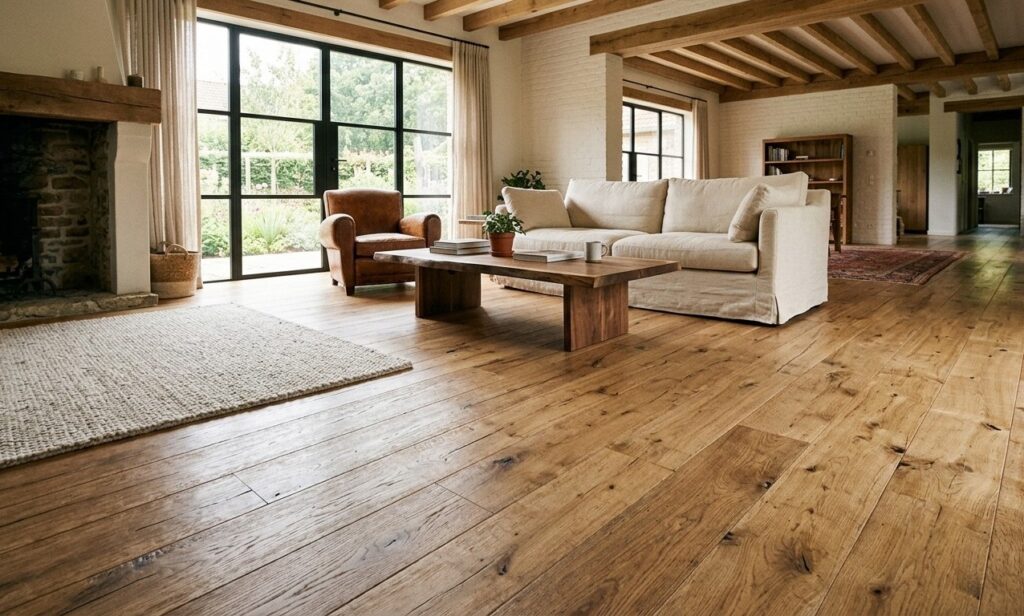
How to Match Wall Color with Wood Floor
Matching wall color with wood flooring comes down to balance, undertones, and contrast. Instead of guessing, focus on how your wood floor colors influence the space and build from there. This approach helps you choose colors that go with wood floors in a way that feels natural and cohesive.
Start with the Floor’s Undertone
Always identify whether your flooring is warm, cool, or neutral before choosing paint. Wall colors should either complement or gently contrast that undertone, not fight against it. This is the most important step in matching wall color with wood floor.
Create Contrast for Balance
Rooms feel more balanced when there is contrast between the floor and the walls. Dark floors usually work best with lighter walls, while light floors can handle slightly deeper tones or accents. This helps avoid a flat or overly heavy look.
Keep the Overall Mood Consistent
Think about the feeling you want the room to have. Warm floors often pair well with cozy, inviting colors, while cooler floors suit clean, calm palettes. Matching the mood helps all elements in the room feel connected.
Test Paint Before Committing
Paint can look very different depending on the lighting and surrounding colors. Always test samples directly next to your flooring and check them throughout the day. This ensures the colors truly work together in your space.
Use Neutrals as a Safe Foundation
If you are unsure, neutral wall colors are often the safest choice. Neutrals are trending this 2026, offering more depth and versatility than ever before. Shades like white, beige, or soft gray pair well with many wood floor colors and create a clean, adaptable base. They also make it easier to update décor later without repainting.
Best Wall Colors for Wood Floors by Undertone
Wood Floor Undertone | Best Wall Colors | Contrast Options | What to Avoid | Design Effect |
|---|---|---|---|---|
| Warm-Toned Wood Floors (Oak, Cherry, Hickory) | Beige Cream Warm taupe Soft greige (warm undertones) | Muted blues Soft greens | Cool gray paints | Creates a warm, welcoming, and grounded space |
| Cool-Toned Wood Floors (Gray-Stained, Ash) | Crisp white Light blue Soft green | Subtle cool contrasts like pale blues | Yellow-based whites Creamy tones | Keeps the space clean, modern, and balanced |
| Neutral Wood Floors (Light Oak, Walnut) | Works with both warm and cool tones Layered neutrals | Bold accent walls Mixed palettes | Overly dominant tones that overpower the balance | Offers flexibility and long-term design versatility |
Frequently Asked Questions
How do I choose a wall color without repainting multiple times?
Start by testing a few paint samples directly on your wall next to your flooring. Look at them throughout the day to see how lighting affects the color. Narrow it down to one or two shades that feel consistent in different lighting. This helps you avoid costly repainting later.
Is it okay to mix warm and cool tones in one room?
Yes, but it needs to be done carefully to avoid clashing. The key is to keep one tone dominant while the other acts as a subtle contrast. For example, warm floors can work with cool accents if they are muted. Balance is what keeps the space feeling intentional.
How important is lighting when choosing paint colors?
Lighting plays a major role in how paint looks in a room. Natural and artificial light can change the appearance of a color throughout the day. That is why testing samples in your actual space is important. It helps you see how the color truly interacts with your flooring.
Should I use the same wall color throughout my home?
You do not need to use the exact same color in every room. However, keeping a consistent palette helps create flow between spaces. Slight variations in shade or tone can still feel connected. This works especially well when coordinating with wood floor colors.
Do wall finishes affect how colors look with wood floors?
Yes, the finish of the paint can change how the color appears. Matte finishes absorb light and look softer, while satin or semi-gloss finishes reflect more light. This can impact how the wall color interacts with your flooring. Choosing the right finish helps complete the overall look.
Choose the Right Foundation for a Cohesive Home
Designing a home that feels balanced starts from the ground up. When you treat flooring as the foundation, selecting the best wall color for wood floors becomes a logical and informed process rather than guesswork.
For homeowners planning updates or new installations, working with an experienced floor installer in Brewster, NY, can make a significant difference. Professional insight ensures your flooring choice supports your long-term design vision and pairs seamlessly with your wall palette.
If you are looking to create a cohesive and timeless interior, Brewster Flooring Company can help guide you toward wood flooring solutions that enhance both your space and your color choices.
Contact Brewster Flooring Company to get expert guidance on flooring and color choices.