
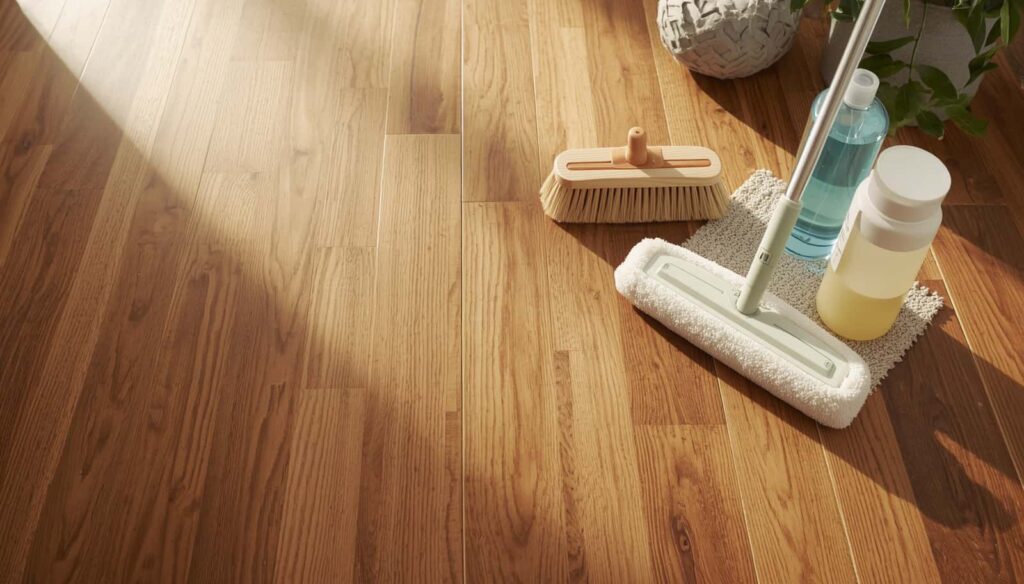
Top 7 Hardwood Floor Maintenance Mistakes to Avoid
Quick Facts
✔ Avoid excess water. Moisture is the leading cause of warping, cupping, and finish failure.
✔ Use the right cleaners. Match products to your floor’s finish to prevent dulling and residue buildup.
✔ Control indoor humidity. Maintain 35 percent to 55 percent to prevent seasonal movement damage.
✔ Protect high-traffic areas. Felt pads, rugs, and routine sweeping reduce surface wear.
✔ Act early on wear signs. Timely recoating prevents the need for more expensive refinishing.
What’s Inside
Hardwood flooring consistently ranks among the most desirable features in American homes. Homeowners report high satisfaction and strong resale value from refinished hardwood floors. Yet most premature hardwood floor damage is not caused by age. It is caused by maintenance mistakes.
The top hardwood floor maintenance mistakes to avoid are: using too much water, choosing the wrong cleaners, skipping routine dust removal, failing to protect surfaces from scratches, ignoring humidity control, delaying recoating, and attempting improper DIY repairs.
Understanding these mistakes can significantly extend the life of your floors, preserve their finish, and prevent expensive refinishing or replacement.
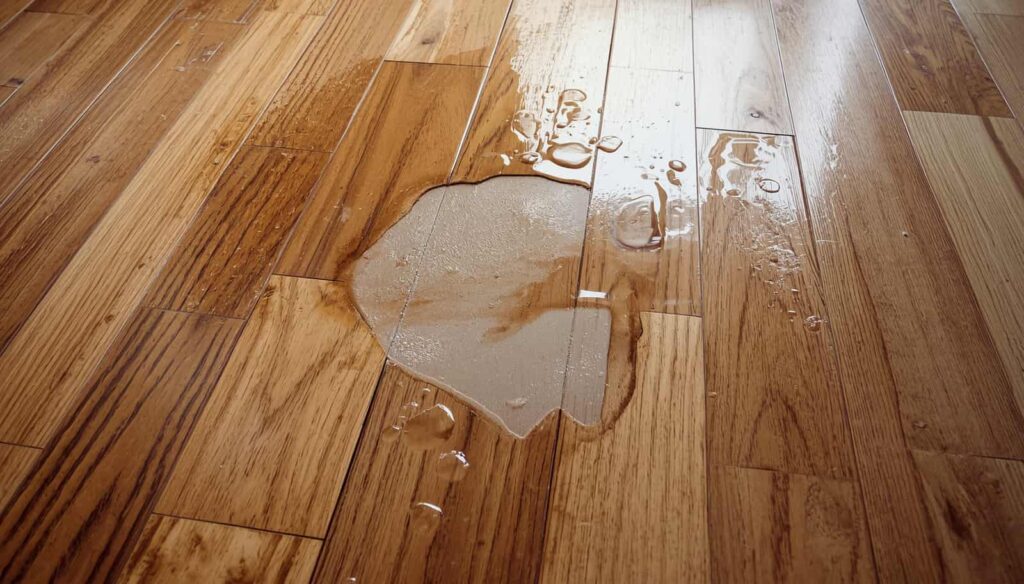
Mistake #1: Using Too Much Water When Cleaning
Why It’s a Problem
Wood is a natural, porous material. Even sealed hardwood floors are vulnerable to moisture at the seams and edges. The Environmental Protection Agency notes that excess indoor moisture contributes to material deterioration and mold risk.
On hardwood floors, too much water can lead to:
- Warping
- Cupping or crowning
- Swelling at the joints
- Finish breakdown
Standing water seeps between boards and beneath the surface, where damage may not be visible until it becomes severe.
Steam mops present similar risks. High heat forces vapor into cracks and can weaken adhesives or finishes.
What to Do Instead
- Use a damp microfiber mop, never a soaking wet one
- Wipe spills immediately
- Use hardwood-specific cleaners approved for your finish
- Avoid steam cleaning altogether
When it comes to hardwood floor cleaning tips, less moisture is always better.
Mistake #2: Using the Wrong Cleaning Products
Common Product Errors
Many homeowners rely on household staples that do more harm than good.
Common mistakes include:
- Vinegar and water mixtures can dull polyurethane finishes over time
- Ammonia-based cleaners that strip protective coatings
- Oil soaps that leave residue buildup
- Applying wax to polyurethane-coated floors causes a cloudy film
Repeated misuse gradually breaks down the finish, leaving the wood exposed.
Why Finish Type Matters
Not all hardwood floors are the same. There are key differences between:
- Surface-finished and oil-finished floors
- Pre-finished and site-finished boards
Each requires compatible cleaning products. Matching your cleaner to the finish type is one of the simplest ways to prevent hardwood floor damage.
Mistake #3: Skipping Routine Sweeping and Dust Removal
Why Dust Is More Harmful Than It Looks
Dust, dirt, and pet dander may seem harmless, but they act like fine sandpaper. Microscopic debris can abrade surfaces through friction. On hardwood floors, daily foot traffic grinds dirt into the finish, causing:
- Micro-scratches
- Loss of shine
- Premature wear in high-traffic areas
Over time, this dulling effect becomes permanent without refinishing.
Recommended Cleaning Frequency
- Sweep or dust mop high-traffic areas daily or every other day
- Clean the entire floor weekly
- Use a soft-bristle broom or microfiber mop
- Vacuum only with a hardwood-safe floor attachment
Consistent dry cleaning is a foundational step in maintaining hardwood floors properly.
Mistake #4: Not Using Furniture Pads or Area Rugs
How Furniture Causes Damage
Heavy furniture compresses wood fibers. Chair legs dragged across floors leave visible gouges. Even small movements create surface scratches that accumulate over time.
Entryways are especially vulnerable. Shoes bring in gravel and grit, which increase abrasion.
Smart Prevention Steps
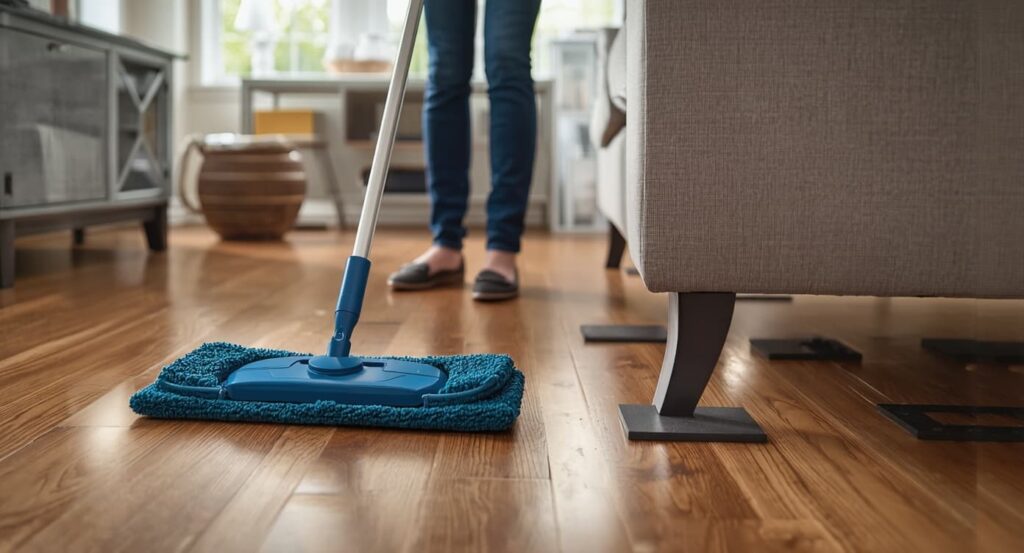
- Install felt pads on all furniture legs
- Use area rugs in high-traffic zones such as hallways and entrances
- Avoid rubber-backed rugs that trap moisture
- Trim pet nails regularly
These small preventative steps significantly reduce long-term wear.
Mistake #5: Ignoring Humidity Levels
Why Hardwood Reacts to Climate
Wood naturally expands in humid conditions and contracts in dry air. The U.S. Forest Service’s Forest Products Laboratory confirms that dimensional changes occur with moisture fluctuations.
In regions with cold winters and humid summers, this seasonal movement can cause:
- Gaps between boards in winter
- Cupping during humid months
- Finish stress and cracking
Ideal Indoor Conditions
Maintain indoor humidity between 35 percent and 55 percent. To achieve this:
- Use humidifiers during dry winter months
- Use air conditioning or dehumidifiers in summer
- Monitor levels with a hygrometer
Humidity control is one of the most overlooked elements of hardwood floor care.
Mistake #6: Waiting Too Long to Recoat or Refinish
Signs Your Floor Needs Attention
Protective finishes do not last forever. When the finish wears down, the wood beneath becomes vulnerable. Watch for:- Dullness in high-traffic areas
- Scratches that penetrate the finish layer
- Water no longer beading on the surface
Recoat vs. Refinish
- Recoat involves applying a new protective layer without sanding to bare wood
- Refinishing requires sanding down to raw wood and applying a new stain and finish
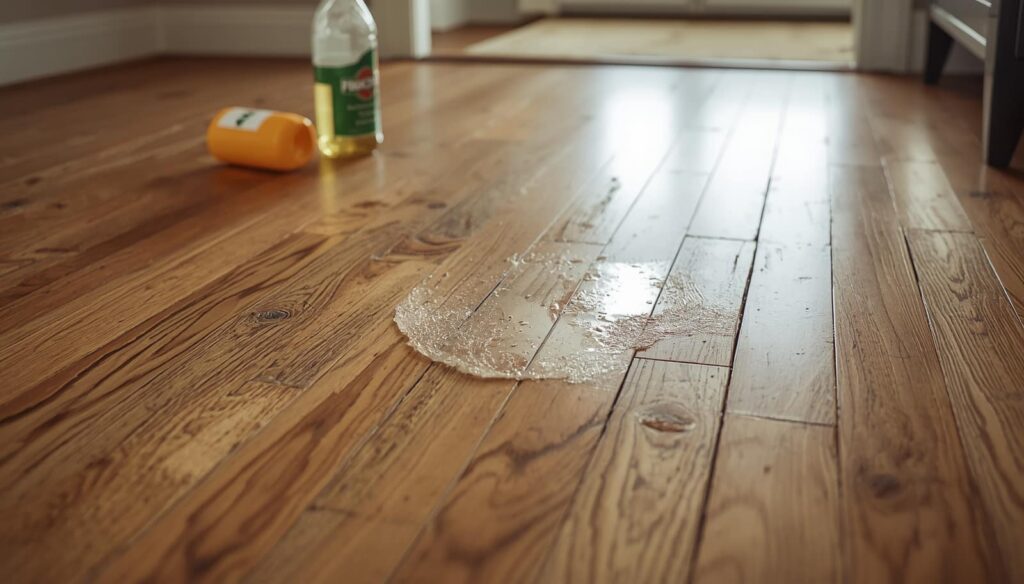
Mistake #7: Attempting DIY Repairs Without Proper Knowledge
Risks of DIY Fixes
Online tutorials often oversimplify hardwood floor repair. Common DIY errors include:
- Over-sanding, which permanently thins boards
- Mismatched stain colors
- Uneven finish application
- Visible patch repairs
Improper sanding can reduce the number of future refinishing cycles your floor can withstand.
When to Call a Professional
Professional help is recommended for:
- Deep gouges
- Water damage
- Widespread finish failure
- Major discoloration
Correct technique, commercial-grade equipment, and proper finish selection make a measurable difference in long-term results.
How to Properly Maintain Hardwood Floors: Step-by-Step Guide
Step 1: Sweep or Dust Mop Frequently
Remove abrasive debris before it scratches the surface.
Step 2: Clean With Approved Products
Use minimal cleaner and follow manufacturer instructions.
Step 3: Control Humidity Year-Round
Keep indoor moisture levels stable to reduce expansion and contraction.
Step 4: Protect High-Traffic Areas
Use rugs, felt pads, and entry mats strategically.
Step 5: Schedule Periodic Professional Evaluation
Routine inspection helps identify finish wear before it becomes structural damage.
Following these steps consistently is the most reliable hardwood floor care guide homeowners can implement.
FAQ: Hardwood Floor Maintenance
How often should hardwood floors be professionally refinished?
Typically, every 7 to 10 years, depending on traffic levels and wear patterns.
Can I use a steam mop on hardwood floors?
No. Steam introduces excess moisture that can cause warping and seam damage.
Is vinegar safe for hardwood floors?
Not for polyurethane-finished floors. It can dull the protective coating over time.
How do I remove scratches from hardwood floors?
Minor surface scratches may respond to touch-up kits. More serious damage often requires professional refinishing.
Why are there gaps in my hardwood floor during winter?
Low indoor humidity causes wood to contract. Gaps often close when humidity levels rise.
Protect Your Hardwood Floors With Expert Care
Most hardwood floor damage is preventable. By avoiding these seven hardwood floor maintenance mistakes and following a consistent care routine, you can protect your investment for decades.
When signs of wear appear, early intervention matters. Professional recoating and refinishing extend floor life and restore appearance before more serious structural damage occurs.
For homeowners seeking experienced hardwood floor refinishing and maintenance services, Flooring Company provides knowledgeable, detail-focused care designed to preserve and protect your floors.